
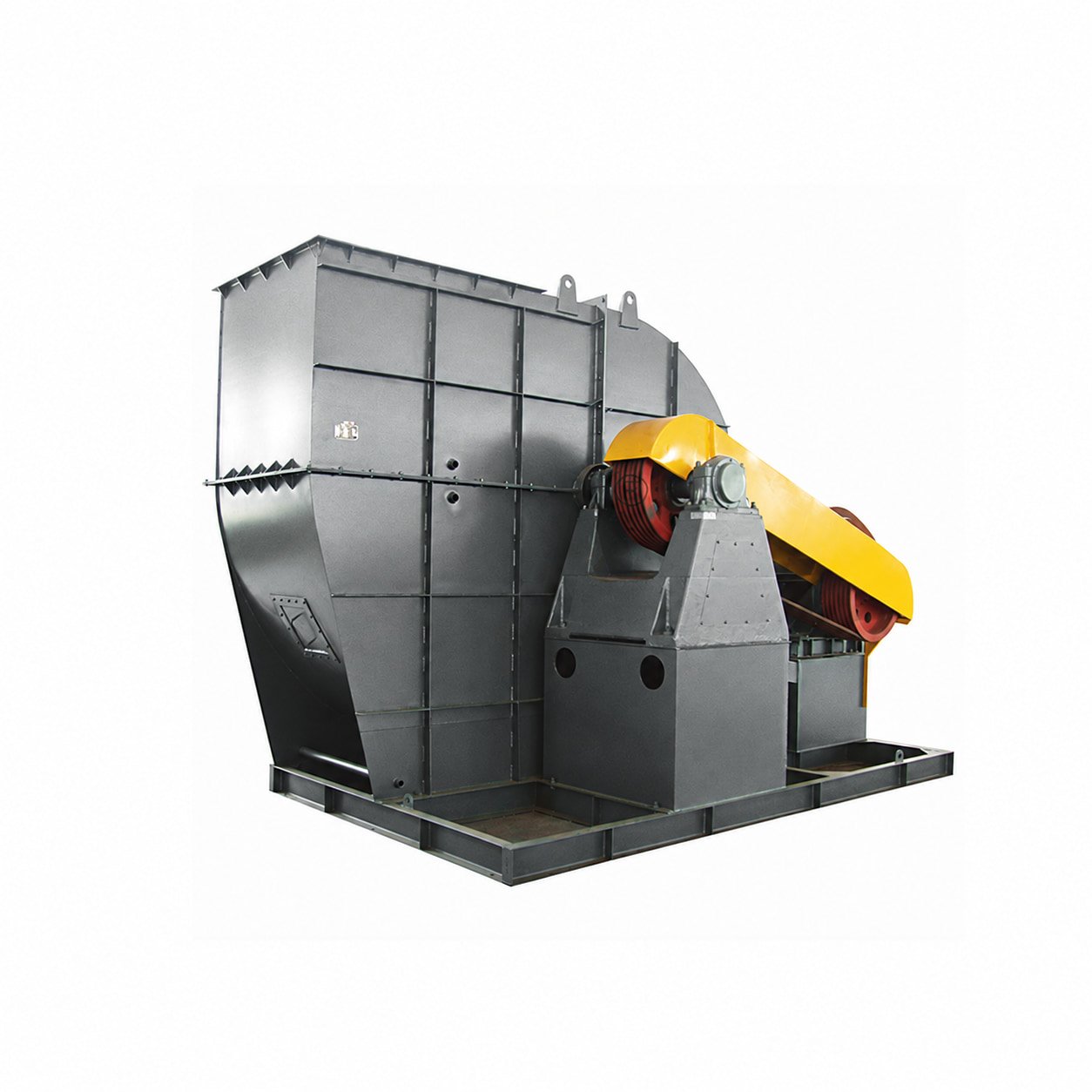
The same fan and motor will not automatically deliver the same duty on 50 Hz and 60 Hz supplies. A change in speed affects airflow, pressure and absorbed power. The motor voltage, winding, pole count and allowable speed also have to match the supply.
Frequency and motor speed
For an AC induction motor, synchronous speed depends on supply frequency and pole count. Actual speed is slightly lower because of slip. With the same pole count, a 60 Hz motor commonly runs faster than a 50 Hz motor, but that does not mean every 50 Hz motor can simply be connected to 60 Hz power.
Voltage, magnetic loading, torque and cooling still need to be checked.
What the fan laws suggest
For the same fan geometry and air density, the fan laws give a useful first estimate:
- Airflow changes roughly in proportion to speed.
- Pressure changes roughly with the square of speed.
- Power changes roughly with the cube of speed.
Power rises fastest. A modest speed increase can therefore overload the motor or exceed the mechanical speed limit even when the new airflow looks attractive.
Why a simple ratio is not enough
The system curve determines the final operating point. Motor efficiency, VFD output, transmission losses and gas density introduce further differences. Noise and vibration also change with speed.
For dual-frequency projects, ask for separate confirmation of airflow, pressure, power and motor suitability at both frequencies.
Export enquiry checklist
- Destination voltage, frequency and phase
- Motor pole count and rated speed
- Required duty at 50 Hz and 60 Hz
- VFD use and maximum output frequency
- Motor power and fan speed limit
- Frequency-specific curve or written confirmation
Related products: T35 Axial Fan and 4-72 Centrifugal Fan.
Technical note: available 50 Hz, 60 Hz and VFD configurations must be confirmed for each fan and motor combination.
Need help matching the fan?
Share airflow, pressure, medium, temperature and installation conditions for the next technical step.
Send an enquiry